Orlando's sub-tropical climate sustains flea and tick reproduction year-round, bypassing the seasonal dormancy observed in northern states. In established neighborhoods like Baldwin Park, College Park, and Thornton…
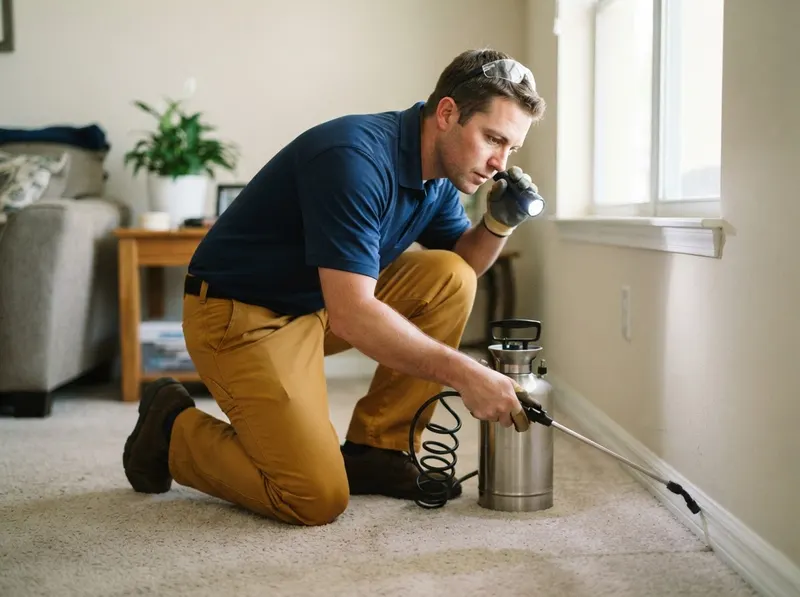
Orlando's sub-tropical climate sustains flea and tick reproduction year-round, bypassing the seasonal dormancy observed in northern states. In established neighborhoods like Baldwin Park, College Park, and Thornton Park, mature tree canopies and constant humidity keep sandy soils moist, creating prime exterior harborages for *Ctenocephalides felis* and *Rhipicephalus sanguineus*. Flea eggs represent 50 percent of an active population, falling off pets directly into carpet fibers, hardwood expansion gaps, and upholstered furniture. Brown dog ticks exploit structural verticality, crawling up baseboards and settling into picture moldings, curtain headers, and subfloor junctures. Eradication fails when DIY liquid aerosols target only biting adults, leaving hundreds of pupae protected inside silken, debris-coated cocoons that resist standard surface sprays.
A systematic protocol combines an adult knockdown agent with an insect growth regulator (IGR) such as pyriproxyfen. The growth regulator mimics juvenile hormones, preventing flea larvae from pupating and stopping tick nymphs from molting into breeding adults. Inside the living envelope, targeted applications focus on micro-climates beneath furniture, baseboard perimeter runs, and pet bedding footings rather than broad, indiscriminate floor saturations. Because chemical controls cannot penetrate the pupal cocoon, mechanical vibration from home vacuuming is required post-treatment to stimulate adult emergence into the fresh residual layer. Occupants and domestic animals vacate the structure for 4 hours until liquid deposits dry completely, eliminating respiratory exposure risks within closed air-conditioning loops.
Properties in communities like Lake Nona, Dr. Phillips, and Hunter's Creek frequently face re-infestation pressure from exterior wildlife corridors. Raccoons, opossums, and feral cats deposit parasites into shaded foundation plantings, turf perimeters, and mulch beds near Lake Eola Park and Delaney Park residences. The exterior defensive strategy treats a 10-to-15 foot perimeter boundary around the building slab, targeting soil dampness zones beneath dense vegetation and porch footings. If an infestation is localized to an exterior dog run, broadcast turf treatment fits the scenario; if parasites have breached interior door thresholds, full interior structural remediation paired with perimeter containment is necessary. The primary operational trade-off is mechanical effort: structural chemical applications eliminate the reproductive cycle, but daily carpet vacuuming over the initial 14 days remains necessary to harvest emerging pupae before they deposit new eggs.
Every job gets a firm, written price after a free on-site visit.
Tell us about your flea and tick structural eradication job in Orlando and we'll send a clear, written quote, usually the same day.
 BugVault Pest Control